- April 1, 2026
- operant_user
Protecting What Matters Most in a Connected Business Environment
Business security is often associated with locks, cameras and controlled entry points. While these technologies remain important, the role of physical security has evolved significantly over the years. Today, it is no longer viewed as a standalone function responsible only for safeguarding buildings or monitoring premises. Instead, physical security has become an integral part of business continuity, operational resilience and workplace safety. As organizations expand their operations, adopt hybrid work models and manage multiple facilities, creating secure and well-connected environments has become essential for ensuring uninterrupted business performance.
What is Physical Security?
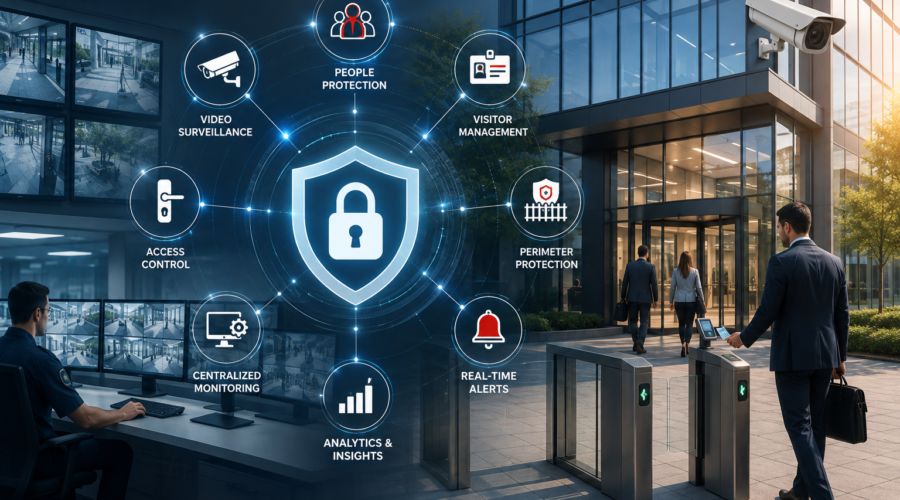
Physical security refers to the strategic approach of protecting people, infrastructure, facilities, equipment and other critical business assets from unauthorized access, theft, vandalism, workplace incidents and other physical risks. It combines intelligent surveillance, access control, visitor management, perimeter protection and centralized monitoring into a unified security ecosystem that provides organizations with complete visibility over their physical environments.
Modern physical security goes far beyond monitoring activity. It enables businesses to understand what is happening across their facilities in real time, respond quickly to emerging situations and maintain a safe environment for employees, customers, partners and visitors. By integrating advanced technologies with intelligent monitoring capabilities, organizations can create workplaces that are not only secure but also more efficient and easier to manage.
Why Physical Security Matters More Than Ever
Organizations today operate in increasingly dynamic environments where business activities extend across multiple offices, manufacturing facilities, healthcare institutions, educational campuses, retail outlets and distributed workplaces. Each of these locations presents unique operational challenges that require a comprehensive approach to security. Protecting people and assets while ensuring smooth day-to-day operations has therefore become a critical business priority rather than simply a facility management responsibility.
A well-designed physical security strategy helps organizations reduce operational risks, improve situational awareness and strengthen workplace confidence. Employees are able to work in secure environments; visitors experience structured and professional access procedures and management teams gain greater visibility into activities occurring across different locations. This combination of security and operational insight enables businesses to make informed decisions while supporting long-term organizational resilience.
The Evolution of Intelligent Physical Security
One of the most significant developments in recent years has been the integration of intelligent technologies into physical security solutions. Advanced video analytics, artificial intelligence, automated monitoring and centralized management platforms have transformed the way organizations approach security. Instead of simply recording events, modern systems can identify unusual activity, monitor restricted areas, recognize predefined security conditions and generate real-time alerts that allow security teams to respond more effectively.
This intelligent approach also extends to access management and visitor authentication. Organizations can establish clearly defined access policies, verify visitor identities and maintain comprehensive records of facility activity through centralized platforms. The ability to manage these functions from a single interface simplifies administration while providing greater control over the overall security environment.
Physical Security as a Business Enabler
Perhaps the greatest value of physical security lies in its ability to support broader business objectives. A secure workplace allows employees to focus on productivity without unnecessary concerns about safety or operational disruptions. Leadership teams benefit from improved visibility into facility operations, while security personnel gain access to actionable insights that help them prioritize responses and allocate resources more effectively.
The information generated through modern security platforms also contributes to better business decision-making. Analytics and reporting provide valuable insights into occupancy trends, visitor activity, access patterns and facility utilization, enabling organizations to optimize operations while continuously improving workplace safety. In this way, physical security becomes much more than a protective measure, it becomes a valuable source of operational intelligence.
Why Choose Operant Infotech?
At Operant Infotech, we understand that every organization has unique security requirements shaped by its industry, infrastructure and operational priorities. Our physical security solutions are designed to help businesses build intelligent, scalable and integrated security environments that protect people, assets and business operations without compromising efficiency. By combining advanced surveillance technologies, access control systems, visitor management, intelligent analytics and centralized monitoring, we enable organizations to create workplaces that are secure, connected and prepared for future growth.